Categories
Uncategorized

Ethics don’t make money

This cartoon’s message and content relates very well with the ethical concerns and organizational challenges discussed in Chapter 11. This cartoon showcases a manager proudly stating, “We run a very ethical company here. Anything unethical is outsourced,”. While humorous, the cartoon underscores a troubling reality. Many organizations in the real world maintain a superficial image of integrity while displacing unethical responsibilities to third parties. This also ties into how the chapter said most Fortune 500 companies had committed some sort of unethical scandal. This directly ties into the chapter’s focus on how organizations often struggle with ethical communication and responsibility, especially under the pressures of capitalism and competition.

In the addition, the chapter emphasizes that ethics in communication involve more than legality or public image and that they require honesty, justice, and a commitment to doing no harm. The cartoon mocks this ideal by showing how some companies attempt to appear ethical without practicing ethical behavior.

Personally, I’’ve been under a similar organization before. During one of my recent summers, I worked in a canvassing company, where they used a legal loophole to require me to do 50 hours of work while paying me for 35 hours of work. Overall, this chapter is sending a message that ethical communication must be genuine and integrated throughout the organization, not outsourced or avoided.

Categories
Uncategorized

We don’t have a group leader

In the cartoon, it showcases a lot related to the concepts about group communication in Chapter 10. The cartoon is of a business meeting where someone says, “Benson, will you stop trying to dominate the meeting,” toward someone who is holding a huge microphone. This cartoon relates closely to concepts from the chapter because it explains that effective group communication requires equal participation, active listening, and balanced leadership. In this image, Benson appears to be taking over the conversation, likely ignoring group dynamics and stifling collaboration. This highlights one of the factors mentioned in the chapter -power and power-over. When a single person controls the flow of discussion by exerting dominance, it disrupts group synergy, discourages input from others, weakens decision-making, and harms the group relationship.
Personally, I always see this happen during class debates, whereas there is always that one person who always raises their hand and speak loudly to the class, while showing an angry expression on their face. This often leads to frustration, silence from quieter members, and a less effective debate/discussion. The cartoon uses humor to show how such behavior is noticed and sometimes called out, which is necessary for maintaining group balance. Overall, the cartoon teaches how group communication requires respect and fair discussion by members of the group.


Categories
Uncategorized

Boy or girl?

This cartoon effectively captures many of the key points discussed in Chapter 13 of the book. The content humorously exaggerates a real issue discussed in the chapter about how communication reinforces gender norms. In the image, a pregnant woman angrily accuses a man of being a “male-identifiable oppressor” simply for asking if her baby is a boy or girl. Even though the conversation is somehow exaggerated, the exaggeration is used to reflect concerns about how society imposes gender roles even before birth. The chapter explains that gender is not purely biological but is constructed and reinforced through language and daily interactions.
I’ve personally experienced how assumptions based on gender shape the way people speak to me or expect me to behave. For example, when I order a strawberry acai refresher at Starbucks instead of an espresso, I would get called ‘ladylike’ by some of my peers. These labels, though subtle, carry social expectations that define how we are supposed to act based on our perceived gender. This cartoon and the reading both highlight the current cultural norms around gender identification and how important it is to be aware of the messages we send in spite of this culture, and how language can either reinforce or challenge cultural gender norms.

Categories
Uncategorized

Celebrate our difference

In chapter 12, it delves into communication across people from different cultural backgrounds. In this cartoon, it shows people from various cultural backgrounds and race greeting each other in different languages, such as “Hola,” “Hello,” and “Namaste”. It directly relates to the chapter’s explanation of different languages used by different people across the globe to communicate. The chapter emphasizes that language is not only a tool for communication but also a reflection of cultural values, worldviews, and group identity. In addition, the cartoon highlights how each person brings their language and culture into the interaction, yet all are trying to communicate the same message and greeting. The chapter’s section on “Language and Culture” explains that effective intercultural communication begins with recognizing and respecting linguistic diversity. This cartoon reinforces that idea by illustrating a multilingual greeting exchange, reminding us that intercultural competence involves acknowledging differences while finding common ground.

This chapter and cartoon can be directly related to my everyday life, as I experience cultural differences all the time. In my college, there are plenty of international students from across the world. Just by being curious and understanding different cultural norms for eye contact and personal space, has helped me broaden my understanding about the world and avoid misunderstandings.

Categories
Uncategorized

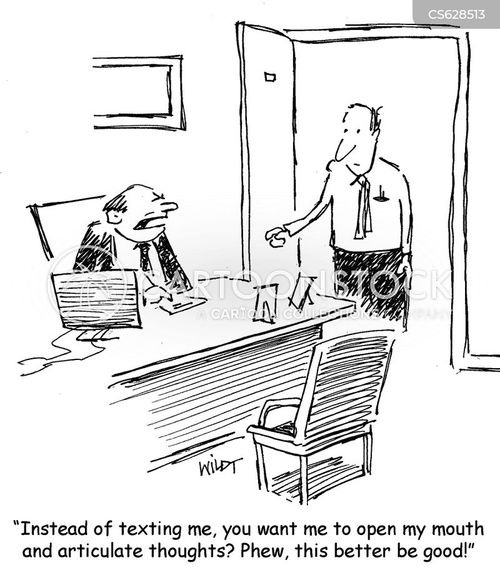
should have emailed me

Interpersonal Communication Cartoons and Comics - funny pictures from ...

In this cartoon, it highlights the importance of the right medium to establish a great interpersonal relationship. Chapter 9 mentions that successful interpersonal communication comes from selecting the right medium based on message complexity and relationship dynamics. Richer channels—such as face-to-face conversation and phone call—offer immediate feedback, tone, and nonverbal cues, in which the parties can connect better. In the cartoon, it shows that the worker has angered the manager by selecting the right medium to communicate, which is face-to-face, when the manager shows reluctance to speak directly, preferring the comfort and convenience of text. The cartoon pokes fun at how low-richness channels might limit nuance, misrepresent meaning, or reduce communication authenticity, and individuals should consider the relationship dynamic and information before choosing the right medium.


In my workplace, this resonates strongly. I once had to deliver sensitive feedback about questions I had about Excel to my supervisor. Initially, I considered emailing back and forth, but after the annoyance that would incur my supervisor, I opted for a video call. The visual cues, tone of voice, and real-time exchange helped us clarify expectations and maintain rapport—something text alone would never have achieved. Like the cartoon, it highlighted how certain conversations simply deserve richer channels to preserve clarity and empathy.

Categories
Uncategorized

So do they like my speech?

In this cartoon, it depicts a great example of what non-verbal communication entails and what kinesics means as a form of communication. Within the cartoon, the person on the right, the speaker, had just concluded his speech and was looking for input on his speech. While the audience didn’t say a word about his performance and speech, different audience had already shown their thoughts and opinions about the speech through their body language. For example, one is asleep, another yawns, and a third raises a hand showing his intention to ask a question. To add more to the cartoon, even though the speaker just gave a lecture about non-verbal communication, he fails to read them the audience. This reflects the chapter’s emphasis on how gestures, facial expressions, and posture convey powerful messages, sometimes more honestly than words at times.

This cartoon relates a lot to my work experience. In my work and school experience, especially during meetings or project presentations, I’ve seen how nonverbal feedback and body language, like eye contact, fidgeting, or nodding, relays their interest, confusion, or boredom toward the material I am conveying. From understanding each and every one of the non-verbal communications it signifies whether or not I need to further improve in my speech and presentations. This cartoon reminded me that being aware of nonverbal responses is just as important as delivering content. The cartoon humorously highlights how overlooking body language can lead to communication failures, even among experts.

Categories
Uncategorized

Verbal Communication Gone Wrong

This cartoon is a great representation of what symbol means in Chapter 2. In the cartoon, it showcases text messages between a female and the other person. During the message, the sender communicate only with emojis while the female sends short text messages, which serve as symbolic representations of thoughts, emotions, and intentions. Within the chapter, a symbol is a verbal communication that is arbitrary, ambiguous, and abstract. This cartoon exaggerates the ambiguous element of the symbol by having a punch line, where the sender is a literal emoji instead of a person, showcasing how symbols can be ambiguous and interpreted differently by different people, since the female thought of it as a way for the sender to showcase thought and emotion, while in truth the sender sends the emoji because he is actually an emoji.

This cartoon reflects my own experience with texting and online communication. For example, everyone has their interpretation of different emojis. When texting friends, some of them interpret the two hands together emojis as praying, while others see it as a high-five. Similarly, at work, messages with emojis or brief replies can easily be misinterpreted. The cartoon illustrates how digital symbols can oversimplify or distort communication, echoing key points from the chapter.

Categories
Uncategorized

Same message in different time

This cartoon highlights the progression of communication over historical ages. It relates to Chapter 4 in its discussion of how communication has evolved over time. On the left panel, it showcases early humans using primitive verbal expressions and speech like “OOG” and “ROLF”, while on the right panel, modern humans use text-based abbreviations like “OMG” and “ROFL” on mobile devices. The two panels convey the same messages but just in different forms. This cartoon captures the history of communication mentioned in the chapter, whereas humans used to mainly communicate in public speeches and face-to-face interaction during eras like the Classical Era and the Renaissance, to technologically mediated forms like texting and social media. It reflects how the New School period focuses on technological advancements and the impact of media and digital communication on human interaction.

This cartoon can be related to me, as a modern human who uses the same form of communication and abbreviations in my daily communication. This cartoon also makes me wonder if people in the past had similar method of communication, whereas they abbreviated messages in short forms for quickness. It’s a funny but accurate way to show how far we’ve come in the way we connect and share meaning.

Categories
Uncategorized

‘Telephone’ in real life

This cartoon connects well with the first chapter of the book. In this chapter, authors introduced two models of communication – Linear Model and Transactional Model. In the Linear Model, communication directly flows from sender to receiver, but noise—anything that interferes with the message—can disrupt that process. In this cartoon, it showcases an office space, where co-workers/receivers misinterpreted the sender’s original message from ‘communication skills’ to ‘forgotten his pills’. This misinterpretation was created when confusion compounded by another participant interpreting the behavior as forgetfulness, showing how quickly a message can break down due to noise in the channel. The confusion of this cartoon further reinforces the element of the Linear Model and its idea of noise.

This can relate to my everyday life when it comes to text messaging my friends, family and coworkers. For example, if I type something autocorrect changes (like “skills” to “spills”), the person receiving it might misunderstand the entire message because of my mistake. In this situation, the noise would be the auto-correct feature of my phone’s software. Like the characters in the cartoon, the conversation can easily go off track if the receiver interprets the message differently than intended. This shows how even in simple communication, noise can significantly affect understanding.